
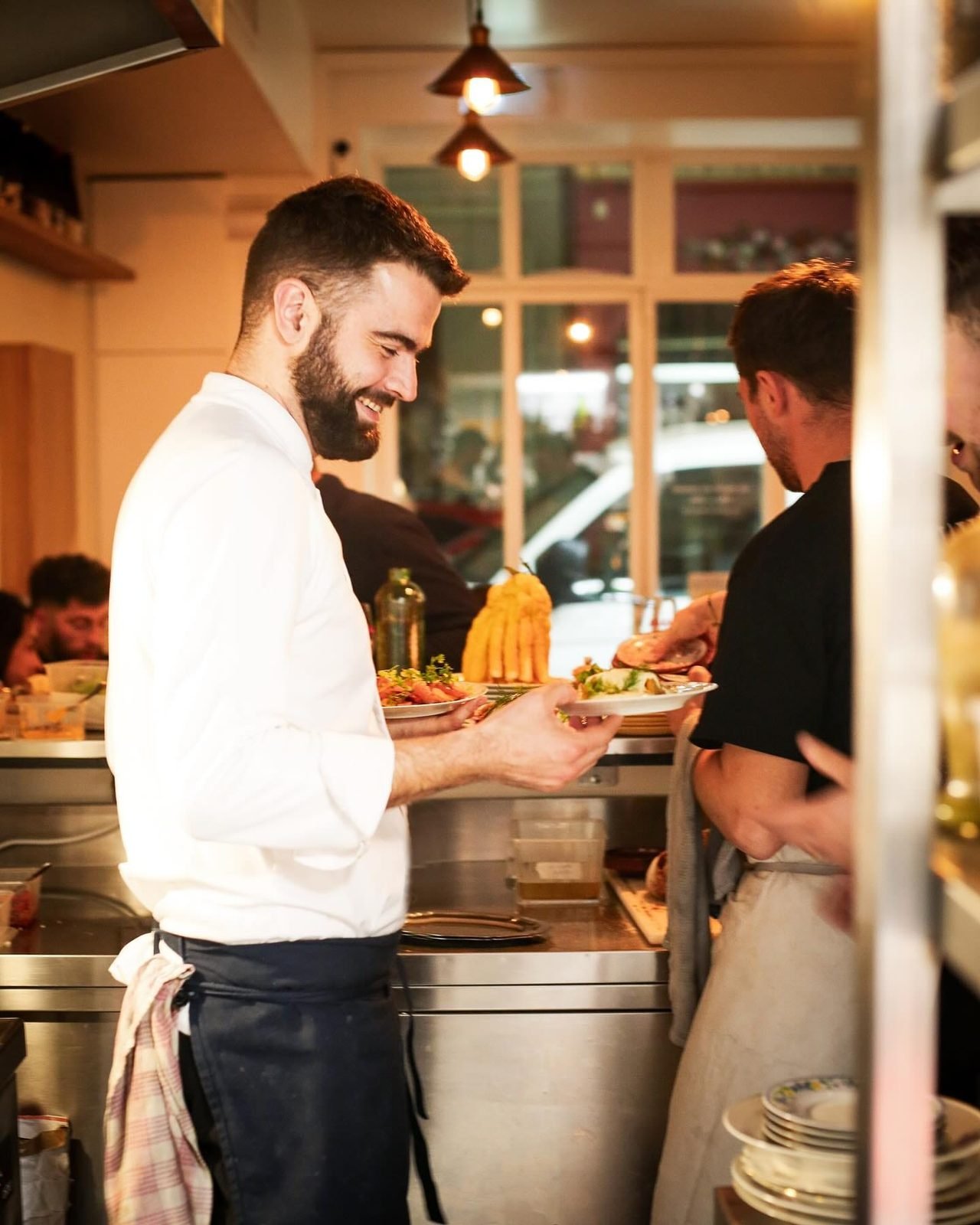
Private tours in Lyon: a food tour and a taste of the terroir, made to measure
Lyon doesn't impress, Lyon is understood. It is the only French city whose undisputed hero is a cook, and the only UNESCO World Heritage site in France that is not a monument but an entire urban fabric. You don't really visit it by looking: you visit it by eating, and by listening to the people who live here.
We are from Lyon, and we have chosen to show you our city through its food: a progressive meal from one restaurant to the next, or a day that follows the whole chain of the terroir, from producer to stove. With us, a food and wine tour in Lyon is always a private tour, led by an Insider who knows the kitchens and the hidden courtyards.
Our two food tours in Lyon
 Full day
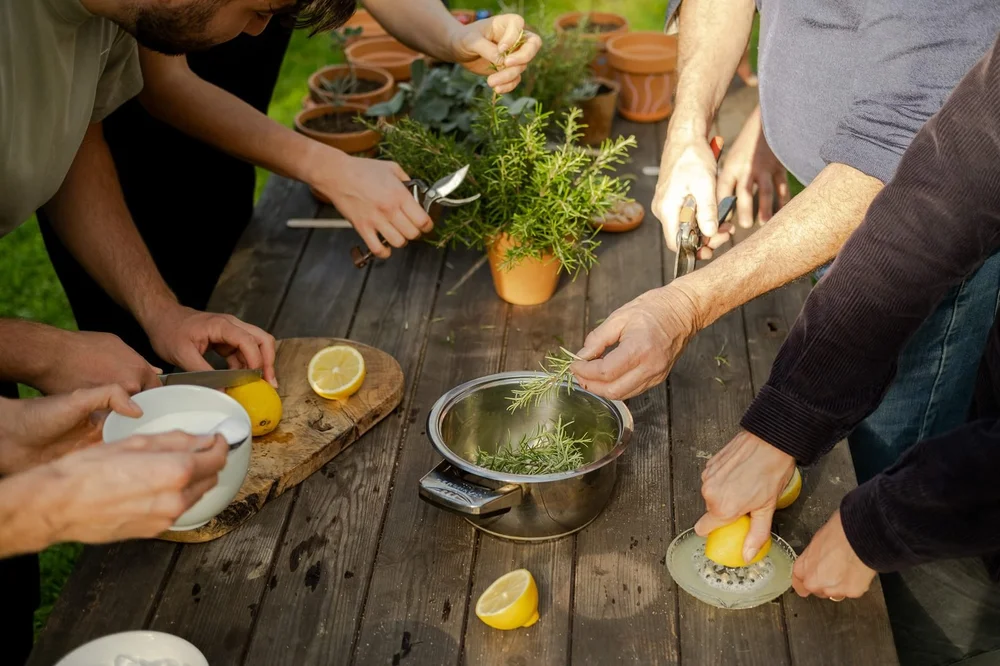
Lyon Food & Wine Tour: From Farm to Table
The morning on the farms, the afternoon at the stove, the evening at the table, and with every bite you will know where it came from.
- Full day
- Farms, château, kitchen
- Lyon
From 1 283 €
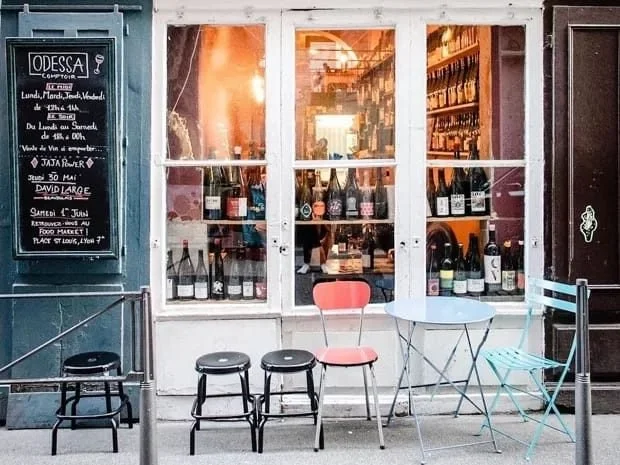
Lyon Food & Wine Tour: One Meal, Three Restaurants
One meal, three restaurants, and the Presqu'île between courses.
- 2 h 30
- 3 restaurants
- Presqu'île, Lyon
From 400 €
The price shown is the package for two people, with a supplement per person from the third traveller. The exact amount, available dates and booking are in each tour's calendar.
Lyon food trip: from the market halls to neighbourhood tables
Lyon's specialities
Lyon has a repertoire of its own, found nowhere else in this form: pike quenelle, saucisson brioché (sausage baked in brioche), tablier de sapeur (breaded tripe), cervelle de canut (a herbed fresh cheese) and pink praline. These are the dishes of the canuts — the city's silk weavers — and of the mères lyonnaises, born of a working-class cuisine that wasted nothing, and the city's chefs keep reinventing them.
Then there is the mâchon, the morning snack — charcuterie, cheeses, a glass of Beaujolais — that the canuts ate before the working day and which remains a local institution. Our farm-to-table day includes one.
Lyon is also a chocolate city, something easily forgotten behind the charcuterie. The windows of the chocolatiers on the Presqu'île are worth as much as many restaurant menus, and the coussin de Lyon — a chocolate ganache wrapped in almond paste — is still the sweet people take home from here. A gourmet city is never gourmet in just one register.
From the market halls to neighbourhood tables
For a long time the city was ruled by its mères lyonnaises, before Paul Bocuse made it a world capital of food; the market halls that bear his name now bring together the artisans who supply the city's kitchens — cheesemongers, charcutiers, chocolatiers. A walk around them takes an hour and gives you Lyon's food map in miniature. But Lyon's real gastronomy is not only played out there: it happens in the neighbourhood bistros, the food spots where the Lyonnais themselves eat and whose menus change with the seasons.
It is among these places that we choose the three tables of our progressive food tour — and the selection changes with the season and with what you like. Tell us when you book.
Three wine regions less than an hour away
Few cities in the world have three major wine regions less than an hour from their centre. Beaujolais begins thirty minutes to the north, Southern Burgundy is less than an hour away, and the Northern Rhone Valley is twenty minutes south by train. That is what makes Lyon the best possible base for a wine tour.
A wine tour from Lyon therefore needs no logistics at all: all our vineyard tours leave from here, with train tickets included or a private transfer. You sleep in the city, spend the day in the vines tasting at winemakers' estates, and come back for dinner without having driven. It is the combination our travellers ask for most: a food tour in the city, a wine tour in the vineyards.
Discover Lyon: what you see here and nowhere else
Every day is built with your Insider, and no two are ever the same. Here are a few of the places where we take our travellers — as examples, to give you an idea of what Lyon keeps to itself.
- Three tables of the Lyonnais. The three addresses are the ones we go to ourselves. There is a good chance you will be the only travellers there that evening, and that is exactly the point.
- The Presqu'île, the least-visited part of historic Lyon. It is the least touristy part of UNESCO-listed Lyon. Only a few centuries ago it was still marshland, and it grew considerably over the last century: here you can read the city layer by layer.
- Stories from the Second World War. Lyon played a particular role during the Occupation, and the Presqu'île still keeps the traces behind ordinary façades. These are neighbourhood anecdotes, told in front of the place where they happened.
- Where the veterinary school was invented. The world's first veterinary school opened in Lyon. You walk past the spot — and without the plaque, nobody would guess.
- Producers of the Monts du Lyonnais, depending on the season. Fruit, vegetables, dairy, poultry: who welcomes you depends on what there is to harvest that day. We are the only outsiders they agree to let in.
- A medieval castle, privately, with its owner. The visit takes place outside any public opening. The questions asked on the spot shape what the visit covers.
- A cooking workshop right in the centre. The private class is held in a cooking studio or in a private flat in the heart of the city. Either way, you cook what was bought that same morning.
Private tours in Lyon: what a private tour changes
Tables where you are expected
Our tours are never shared with other travellers. The three restaurants of the progressive meal know you are coming, the chef of the cooking class builds the menu around what you bought in the morning, and the producers open their doors because we buy from them all year round. A private tour here is not an extra comfort: it is what makes the programme possible.
An Insider at the wheel, or on foot
In the city, the tour is on foot: your Insider walks with you between the addresses — a few hundred metres across the Presqu'île, just enough to make room before the next course. For the days that leave Lyon, your Insider drives: a private transfer from your hotel, and nobody else in the vehicle.
Vieux Lyon, the Presqu'île and the traboules
Lyon's historic site covers four areas, each telling the story of an era: Fourvière and its Roman remains, Renaissance Vieux Lyon and its traboules — private passageways that cut through the buildings from one street to the next —, the Presqu'île between the Rhône and the Saône, and the Croix-Rousse, the hill of the canuts and their silk workshops.
Our food trip crosses the Presqu'île on foot between courses: the Ainay district and its Romanesque basilica, the inner courtyards, the street where the world's first veterinary school opened, and the façades behind which part of the history of the Resistance was played out. The stories come with the meal.
Planning your stay in Lyon
How long to stay
Two days are enough to see the city and eat properly. Three to four days open the door to the surrounding vineyards: one day in Beaujolais or Burgundy, another in the Rhone Valley, with time left for the city. A food-lover's weekend with a food tour on Saturday and a day in the vines on Sunday is the combination our travellers ask for most.
When to come
Lyon can be visited all year round: the tables never close, and the traboules even less. Spring and autumn are the most pleasant for walking; December has its Festival of Lights, spectacular but very crowded; winter is the best season for the tables and for the winemakers around the city, who can take more time.
Where to stay
The Presqu'île to be at the centre of everything and within walking distance of our meeting points, Vieux Lyon for the setting, the Croix-Rousse for its village feel. Part-Dieu and Perrache stations put Paris two hours away and the vineyards twenty or thirty minutes away.
Our tips to make the most of it
Book your tables: Lyon's good food addresses are small and full. Plan to be hungry — a progressive meal over three courses is not a tasting. Let us know about allergies and dietary requirements when you book, so the kitchens can adapt. And keep a morning free for a mâchon: it is the most local breakfast there is.
Lyon's bouchons: why we let you discover them on your own
The bouchon is Lyon's best-known institution: a narrow dining room, checked tablecloths, friendly service and a repertoire that never changes — quenelle, saucisson brioché, tablier de sapeur, cervelle de canut, praline tart —, all washed down with a pot of Beaujolais or Côtes du Rhône. It is the legacy of the working-class tables that fed the canuts and the carters, and an experience every visitor to Lyon should have at least once.
They are everywhere: in Vieux Lyon, on the Presqu'île around the Terreaux, on the slopes of the Croix-Rousse. They are easy to spot, easy to book and need no guide to be enjoyed: push the door, ask for the dish of the day, and take your time.
That is precisely why our tours don't go there. A bouchon you will find on your own, without us. The neighbourhood tables where the Lyonnais eat, the producers of the Monts du Lyonnais and the kitchens where you are expected, much less so. We devote the time of your tour to what you could not find by yourself — and leave the bouchon to you for a free evening.
Private tours for companies: seminars, team building and hen parties in Lyon
The same tour, food or wine, can be privatised for groups: seminars, team building, incentives, client evenings or hen parties, in Lyon as well as in the surrounding vineyards. The programme is built with you, according to the duration, the number of participants and what you want your teams to take away from it.
Why book your private tour with Insiders
We are from here. The tables we take you to are the ones we go to, the producers are the ones we buy from, and the stories you will hear between courses appear in no guidebook. Every tour is private: your group, your Insider, and a selection that adapts to your tastes.
We design and run our own tours, with no middleman. Choose yours above, or write to us for a tailor-made programme.
Frequently asked questions
What is a food tour in Lyon?
With us, a food trip comes in two formats. The progressive meal serves the starter, main course and dessert at three different addresses, with a glass chosen at each stop and the Presqu'île told between courses. The farm-to-table day follows the whole chain: farm visits in the morning, a cooking class with a private chef in the afternoon, dinner in the evening. Both are private tours.
Which Lyon specialities should you not miss?
Pike quenelle, saucisson brioché, tablier de sapeur, cervelle de canut; for something sweet, pink praline and the coussin de Lyon, the city's chocolate confection. The morning mâchon — charcuterie, cheeses, a glass of wine — is the most local experience, and the one visitors know least.
What is the difference between a bouchon and a Lyon restaurant?
The bouchon is a historic format, born of the city's working-class tables: a short, traditional menu, friendly service, dishes of pork and river fish. Many very good Lyon tables are not bouchons: they are neighbourhood bistros whose menus follow the seasons. Bouchons are easy to discover on your own; our tours take you to those other tables, the ones the Lyonnais go to.
Can you combine a food tour and a wine tour?
Yes, and it is the formula we recommend. Allow one day for a wine region — Beaujolais, Southern Burgundy or the Rhone Valley — and, for the food side in the city, a farm-to-table day or the time of a meal. All our tours leave from Lyon.
Where can you taste wine in Lyon?
Both our Lyon tours include tastings and food and wine pairings with commentary, and the vineyards are twenty to thirty minutes from the city. For an in-depth tasting, it is better to go to the winemaker: that is the purpose of our tours in Beaujolais, Burgundy and the Rhone Valley.
Are the tours suitable for special diets?
Yes, as long as you tell us when you book: the restaurants and the chef build the menu accordingly. It is even essential for the progressive meal, since three different kitchens are involved.
Do you need to know how to cook for the cooking class?
No. The chef adapts to everyone's level: you can do everything or simply join in the steps you enjoy.
Do you organise private tours for groups and companies?
Yes, in the city as well as in the nearby vineyards, from small groups to company seminars. Write to us with your dates and group size: we will build the programme with you.