
Private Rhone Valley wine tours: tailor-made vineyard and terroir visits
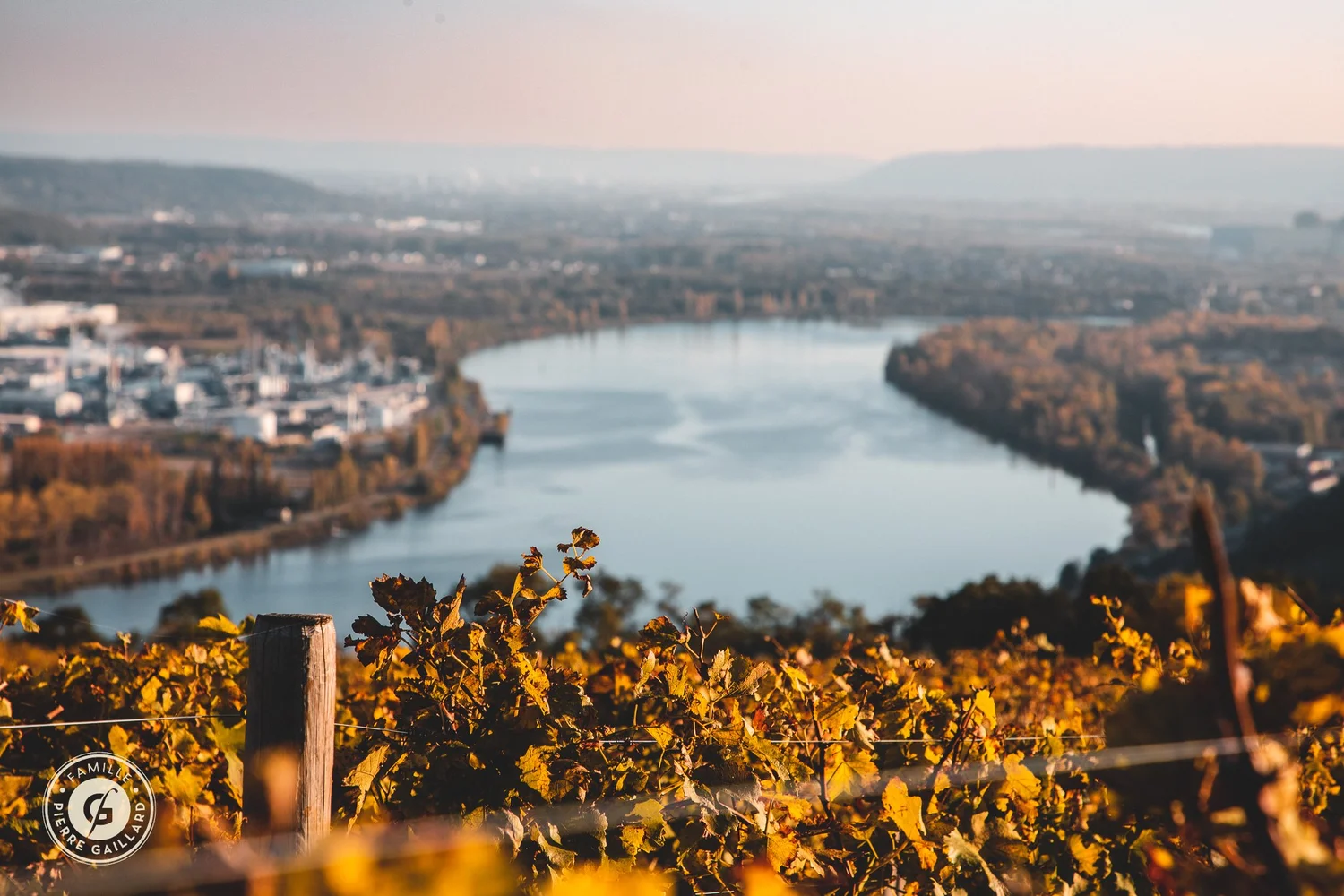
Twenty minutes from Lyon, the Northern Rhone begins: slopes so steep they are still worked by hand, tiny appellations that have become world-famous, and syrah, a grape with no equivalent anywhere else. Of the three wine regions around Lyon, it is the closest to the city, and the least visited.
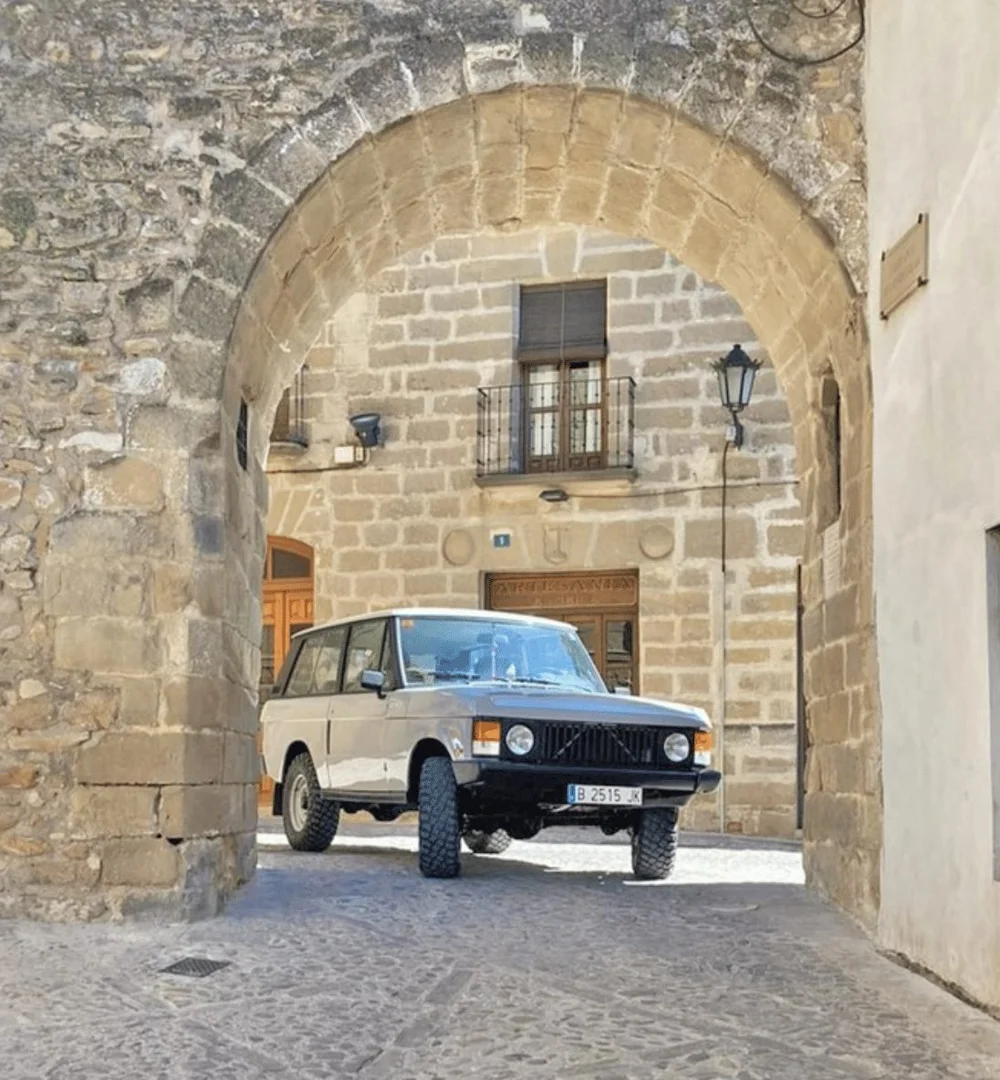
Our tours follow the back roads in a vintage Range Rover, from Côte-Rôtie to Saint-Joseph, to family estates where you sometimes taste the wine straight from the barrel. A food and wine tour in the Rhone Valley comes, with us, as a half day or a full day, always private, always departing from Lyon, with an Insider who drives and tells the story.
Our two wine and food tours in the Rhone Valley
 Full day
Rhone Valley Food & Wine Tour
Côte-Rôtie, Condrieu, Saint-Joseph: three names that became international on slopes no machine will ever reach.
- Full day — 8 h
- 2 to 4 wine estates
- Lyon
From 998 €
 Half day
Rhone Valley Wine Tour: Vineyard Visit & Barrel Tasting
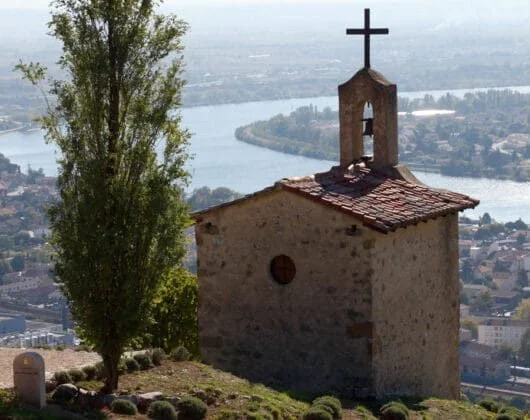
Twenty minutes from Lyon, slopes so steep they are still worked by hand. A half-day between Côte-Rôtie and Condrieu: you taste the syrah straight from the barrel, push open the door of a chapel the forest ended up swallowing, and cross a village that has carried, for centuries, a name it was given by mistake.
- Half day — 3 h 30
- 1 to 2 wine estates
- Lyon
From 560 €
The price shown is the package for two people, with a supplement per person from the third traveller. The exact amount, available dates and booking are in each tour's calendar.
Wine tours through the slopes and appellations of the Northern Rhone
Slopes worked by hand
On the right bank of the river, the vines do not grow on the plain: they cling to slopes of schist and granite, held up by dry-stone walls, on terraces known locally as chaillées. Facing due south, they soak up the heat: here the climate does half the work and people do the other half. No machine can climb up there. Every vine is pruned, trained and harvested by hand, which explains both the small volumes and the price of the bottles.
It is also what gives these landscapes their outline: a wall of vines towering over the Rhône, visible from the road and impossible to mistake for any other French vineyard. A wine tour in the Côtes du Rhône starts with this geography lesson, and no vineyard tour of the Rhone Valley makes sense without it.
North and south: two Rhone Valleys
People speak of the "Côtes du Rhône" as a single whole, but the valley is in fact home to two distinct wine regions. In the south, around Avignon and Orange, grenache dominates on rounded pebbles, the estates are large and the names known to everyone: Châteauneuf-du-Pape, Gigondas, Vacqueyras. In the north, between Vienne and Valence, syrah reigns alone on tiny hillsides. Climate divides the two as much as soil does: Mediterranean and dry downstream, more continental upstream, where the vines ripen slowly.
Our tours focus on this northern part — not because it is easier, but because this is where family estates still open their cellars, and everything lies twenty minutes from Lyon. The crus fit into a handful of names: Côte-Rôtie, Condrieu, Saint-Joseph, Hermitage, Cornas.
The syrah crus: Côte-Rôtie, Saint-Joseph, Cornas
Côte-Rôtie opens the vineyard south of Vienne, around Ampuis. The appellation is split between two hillsides, the Côte Brune and the Côte Blonde, whose soils differ enough for the wines not to resemble each other — a gap you notice immediately when you taste them side by side. Further south, Saint-Joseph stretches over some sixty kilometres, followed by Crozes-Hermitage, Hermitage and Cornas.
All of them are built on syrah, and each draws something different from it: pepper, violet, black fruit, smoke. A cellar tour with a comparative tasting remains the only honest way to understand what these names stand for.
Condrieu's viognier
Condrieu is the area's white exception: a single grape, viognier, on barely a few hundred hectares, for a wine whose aromatic intensity — apricot, white flowers, honey — has no equivalent. The appellation almost disappeared in the 1960s before being rescued by a handful of winemakers, and its volumes remain tiny.
At its heart lies Château-Grillet, one of the smallest appellations in France, set on a few hectares shaped like an amphitheatre. It cannot be visited, but you see it from the road — and that alone is a lesson in wine geography.
Food tour: the table of the valley
Lunch at a local table, picnic or private barbecue
The full day stops at noon at a local table, with the wines to match — or, depending on the season and your choice when booking, sets up a picnic or a private barbecue in the middle of the vines. This is the food part of the tour, and it is no afterthought: in this valley, wine was made to go with a very particular cuisine.
The produce of the valley
A food tour in the Côtes du Rhône is also about what the Rhone Valley corridor produces: olive oil from Nyons, fruit from the Drôme, picodon goat's cheese, charcuterie from neighbouring Ardèche, and that local curiosity, the pear grown inside the bottle — a tradition whose principle never fails to surprise those who discover it, and which your Insider will show you along the way.
Valence, at the southern end of the area, has long been a gastronomic stop on the road to the South of France.
Discover the Côtes du Rhône: what you see here, and nowhere else
Every day is built with your Insider, and no two are ever the same. Here are some of the places where we take our travellers — as examples, to give you an idea of what the valley keeps to itself.
- Small estates, and the people who own them. The owners themselves open the cellar and pour the wines. No guide, no tasting room for passing trade: the person in front of you is the one who made what you are tasting.
- A medieval village that tourism forgot. It has no coach park and no souvenir shop. You park by the roadside and walk up, usually without meeting a soul.
- A wild plant expert. He teaches you to recognise, pick and use the edible and medicinal plants that grow between the vines. You never look at a roadside verge the same way again.
- Lunch in a castle that was a ruin. It still was a few years ago. It has since been rebuilt, and today it is one of the tables where we stop at noon.
- An apple orchard, and the person who keeps it alive. The valley does not only produce wine. Visiting an orchard and meeting its owner puts the vineyard back into the farming landscape it belongs to.
- A truffle hunt, dog included. You set out with a truffle hunter and his dog, then lunch is built around whatever has been found. Available on request as an option, at extra cost, and depending on the season.
- The best viewpoints in the area. The slopes being what they are, the road climbs fast. Your Insider knows where to stop so that the valley unfolds before your eyes all at once.
Private estate visits: what a private tour changes
Inside estates that do not receive visitors
A few houses in the area have an open tasting room; most family estates receive only by appointment, and often only through personal connections. Our private tours give you access to those estates, with a guided tasting and, depending on the place, wine drawn straight from the barrel — the way winemakers taste their own work.
An Insider at the wheel
The hillside roads are narrow and winding, and the point of a visit is to taste. Your Insider drives, the vehicle is reserved for your group alone, and the route adapts along the way: one more estate if you want to go further, a stop at the medieval village if the light is right.
Vienne, medieval villages and the heritage of the valley
The vineyard is not visited in a vacuum. Vienne, gateway to the area, was one of the great cities of Roman Gaul: its ancient theatre, its Temple of Augustus and Livia and the archaeological site facing it on the other bank still bear witness to it. It is also the station where our transfers from Lyon arrive, and the natural starting point for a trip through the Northern Rhone.
Climbing towards the heights, the roads pass through medieval villages ringed by vines and isolated chapels that the forest has slowly reclaimed. These stops, and these landscapes, are what turn a string of tastings into a real journey.
Planning your trip to the Côtes du Rhône
How much time to allow
A half day is enough for Côte-Rôtie and Condrieu: one or two estates, a mâchon, a serious tasting, and back in Lyon before lunch. You need a full day to take in three appellations, add the meal and understand what sets them apart — the format we recommend for a first visit.
When to come
Spring and autumn offer the best conditions: low light across the terraces, the landscapes at their best, bearable temperatures on south-facing slopes. The climate here is more continental than further down the valley — summers are hot, winters quieter and well suited to long tastings in the cellar. The harvest, in September, is done entirely by hand — a sight in itself, but a time when winemakers often have less time to spare.
Where to stay and how to get there
Vienne and Condrieu are the most convenient bases for staying in the heart of the vineyards, Valence for exploring the southern end of the area. Lyon remains the most comfortable option: twenty minutes by train to Vienne, tickets included in our tours, or a private transfer.
Our tips for making the most of it
Don't drive. Ask to compare two plots from the same estate rather than two vintages — that is where terroir reveals itself. And if the chance arises, accept the barrel tasting: the same wine, drawn from two different casks, does not taste the same, and it is the best lesson in blending there is.
Why book your private tour with Insiders
Our Insiders live in the region and personally know the winemakers they introduce you to. That is what lets you into family estates that do not receive the public, and lets you taste where organised tours never stop.
We design and run our own tours, with no intermediary. Choose your tour above, or write to us for a tailor-made tour.
Frequently asked questions
What is a food and wine tour in the Côtes du Rhône?
It is a day that combines estate visits and tastings of the three great northern appellations — Côte-Rôtie, Condrieu, Saint-Joseph — with lunch at a local table, a picnic or a private barbecue, as you prefer. The half day focuses on the Côte-Rôtie and Condrieu vineyards.
What is the difference between the Northern and Southern Côtes du Rhône?
The north, between Vienne and Valence, is built on granite and schist slopes planted with syrah, with tiny crus: Côte-Rôtie, Condrieu, Saint-Joseph, Hermitage, Cornas. The south, around Avignon, is larger, hotter and dominated by grenache: another climate, another way of making wine. Our tours cover the northern part, the closest to Lyon.
Can you visit a winery in Côte-Rôtie or Condrieu?
A few estates have an open tasting room, but most family houses receive only by appointment, and often only through personal connections. Our private tours give you access to those estates, with a guided tasting and, depending on the place, wine drawn straight from the barrel.
What is a barrel tasting?
The wine is drawn directly from the cask, before blending and bottling. It is the way winemakers taste their own work, and it shows you how a wine is built: the same juice, drawn from two neighbouring casks, does not taste the same.
How do you get to the vineyard from Lyon?
By train to Vienne, twenty minutes, with the ticket included in the price and sent in advance. A private car transfer is available as an option.
How many estates do you visit?
One or two on the half day in Côte-Rôtie and Condrieu, two to four on the full day, with at least eight different wines. We would rather see two estates properly than rush through four.
Is lunch included?
Yes on the full day: a local table with the wines, or a picnic or private barbecue depending on the season and your choice when booking. The half day includes a mâchon, the morning snack Lyon's silk workers ate before starting work, which has remained an institution in the region.
Can you buy wine and have it shipped?
Yes, directly from the estates you visit, within France and abroad. Purchases are at your own expense and are not included in the price of the tour.